Introduction to the A320
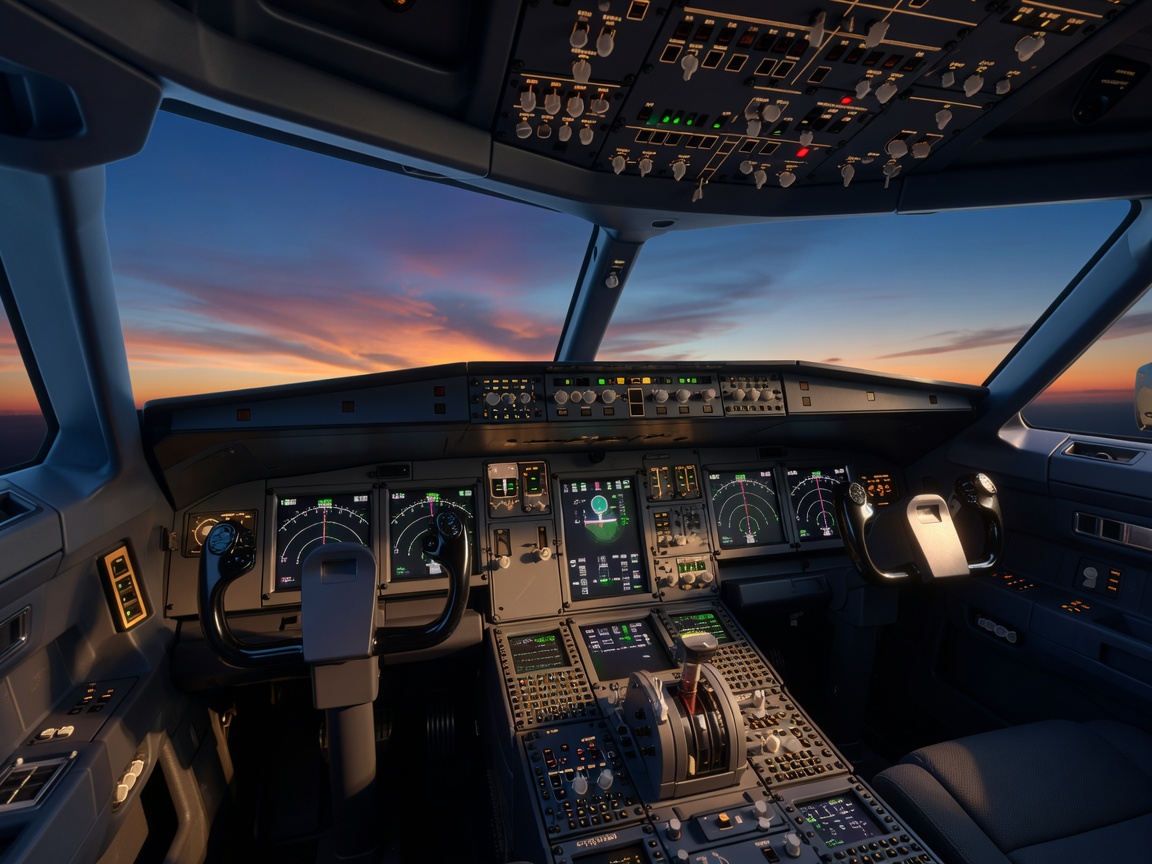
Launched in March 1984, the Airbus A320 family represents one of the most successful commercial aircraft programs in aviation history. Designed to compete directly with the Boeing 737 and McDonnell Douglas MD-80 series, the A320 pioneered the use of digital fly-by-wire flight control systems in commercial aircraft, a technology previously restricted to military jets and Concorde. This innovation fundamentally changed how commercial airliners were flown, prioritizing computer-assisted control surface management over traditional mechanical linkages.
The Original CEO Lineup
The "Current Engine Option" (CEO) designation was retroactively applied to the original A320 family upon the announcement of the NEO program. The family was built around four primary variants based on fuselage length, maintaining identical cockpits and operational procedures. This commonality allowed airlines to significantly reduce pilot training and maintenance costs.
| Variant | Typical 2-Class Seating | Maximum Capacity | Range (nm) |
|---|---|---|---|
| A318 | 107 | 132 | 3,100 |
| A319 | 124 | 156 | 3,700 |
| A320 | 150 | 180 | 3,300 |
| A321 | 185 | 230 | 3,200 |
The baseline A320 entered service in 1988 with Air France. The stretched A321 followed, maximizing capacity for dense routes. The shortened A319 and the further truncated A318 ("Baby Bus") were subsequently introduced to cover lower-demand and challenging airport environments, such as London City Airport, where the A318's steep approach capability was a critical asset.
The NEO Evolution
Recognizing the need for improved fuel efficiency and reduced emissions, Airbus launched the New Engine Option (NEO) program in December 2010. The A320neo family incorporates advanced engines—specifically the CFM International LEAP-1A or the Pratt & Whitney PW1100G-JM geared turbofan. Coupled with large wingtip devices called "Sharklets," these modifications deliver up to a 15-20% improvement in fuel burn per seat compared to previous-generation aircraft.
The NEO program essentially made the A318 obsolete, focusing production on the A319neo, A320neo, and heavily on the A321neo. The A321neo has become a massive market success, outselling competitors by capitalizing on the "middle of the market" segment previously served by out-of-production aircraft like the Boeing 757.
Long Range and Extra Long Range (LR & XLR)
Airbus expanded the A321neo's capabilities through the integration of additional center fuel tanks (ACTs) and aerodynamic tweaks, resulting in the A321LR (Long Range) and the highly anticipated A321XLR (Extra Long Range). The XLR variant boasts an unprecedented range of 4,700 nautical miles (8,700 km), allowing airlines to operate transatlantic and other long-haul routes with narrow-body economics, bypassing traditional hub-and-spoke models in favor of point-to-point transit.
Pros and Cons of the A320 Platform
Advantages for Airlines
The widespread adoption of the A320 family means that parts, maintenance expertise, and type-rated pilots are available globally. The slightly wider fuselage compared to its primary competitor allows for slightly wider seats (typically 18 inches) or the loading of standardized LD3-45 cargo containers in the lower deck—a unique capability in the narrow-body market.
Limitations
While the A320 family is incredibly versatile, the stretched A321 variants, particularly the XLR, can face operational complexities regarding takeoff performance at high-altitude or high-temperature airports when fully laden. Furthermore, prolonged backlogs in the supply chain have pushed delivery slots for new A320neo family aircraft years into the future, creating capacity constraints for rapidly expanding carriers.