The XWB Designation
The "XWB" stands for Extra Wide Body. Originally proposed as an upgraded derivative of the A330 (the "A350 Mk1") to compete with the Boeing 787, customer feedback pushed Airbus to completely redesign the aircraft from the ground up. The result was a significantly wider fuselage, allowing for a comfortable 9-abreast seating layout in economy class, directly addressing the passenger comfort concerns seen in narrower composite competitors.
Material Revolution and Aerodynamics
The A350 represents a paradigm shift in Airbus manufacturing. 53% of the aircraft's weight consists of carbon-fiber reinforced polymer (CFRP), primarily in the fuselage skin, frames, and wings. This material resists corrosion and fatigue far better than traditional aluminum, allowing for higher cabin pressure (resulting in a lower cabin altitude of around 6,000 feet) and increased cabin humidity, which dramatically reduces passenger fatigue on ultra-long-haul flights.
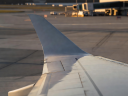
Aerodynamically, the A350 features a sweeping wing design that morphs during flight to optimize drag. The distinctive "Zorro mask" cockpit windows not only provide a striking visual identity but also aid in standardizing temperature control around the radome and avionics bays.
The A350 Fleet Overview
Airbus streamlined the A350 offerings into two primary passenger variants, stepping away from the initially proposed but rarely ordered A350-800.
| Variant | Typical 2-Class Seating | Max Takeoff Weight (MTOW) | Range (nm) |
|---|---|---|---|
| A350-900 | 300–350 | 283 tonnes | 8,300 |
| A350-900 ULR | All Premium (c. 161) | 280 tonnes | 9,700 |
| A350-1000 | 350–410 | 319 tonnes | 8,900 |
| A350F (Freighter) | 111t Payload | 319 tonnes | 4,700 |
Project Sunrise and Ultra-Long Haul
The A350-1000 was selected by Qantas for "Project Sunrise," an ambitious operational plan to fly non-stop from Sydney to London and New York. To achieve this unprecedented endurance, Airbus is modifying the A350-1000 with additional fuel tanks within the existing fuselage structure and increasing the maximum takeoff weight. This capability highlights the supreme aerodynamic efficiency and structural capability of the A350 platform.
Propulsion: The Trent XWB
The A350 is exclusively powered by the Rolls-Royce Trent XWB engine, specifically designed for this airframe. The Trent XWB is one of the most efficient large aero-engines in the world, featuring advanced materials and a highly optimized bypass ratio. This exclusivity simplifies the integration process for Airbus but limits airline choice in the propulsion market.
Market Position
The A350-900 effectively bridges the gap between the Boeing 787-10 and the 777, offering a balanced mix of payload and range. The stretched A350-1000 directly challenges the Boeing 777-300ER and the upcoming 777X series, offering significant fuel burn advantages due to its lighter composite airframe compared to the aluminum structure of the 777-300ER.